Appearing since 1991 Formerly published by the ICGP (International Conference Group on Portugal)
The PSR is a non-partisan academic and transnational forum for the study of countries, regions, communities, and institutions sharing, exploring, transforming, or developing a Portuguese, Brazilian, or other Luso-related heritage
Multi-lingual, peer reviewed, agenda-free research forum. Articles, review essays, and reviews in English, Portuguese, French, and Spanish.
The PSR is closely affiliated with the Lusopohone Studies Association (York University, Toronto), but operates entirely under its own Editorial Board and under policies established by the Baywolf Press imprint. The previous association between the PSR and Trent University (Peterborough, Ontario) ended as of 05 June 2020.
LSA Members Login
Registered LSA members have access to PSR issues starting with PSR Vol. 12, Issue 1 and to all current and forthcoming PSR and Baywolf Press Edited Volumes and Monographs. Old digitized issues (1991 onward) are forthcoming as part of the membership package, pending scan compilation.
Follow the PSR on Academia.edu. Our authors are also posting pre-prints on Academia.edu with our full permission. Not on Academia yet? Join! What are you waiting for?
The PSR and Google Books: Notice: our preview program on Google ended as of 13 February 2016; it is replaced by previews on our own site; our Google Books account has not been maintained for a long while, and will NOT be maintained, by full and autonomous choice. We have no other comment.
Notice of full compliance with EU GDPR rules: Since we are a globally read website, this notice is required in order to avoid difficulties. Please take note that our site DOES NOT use cookies of ANY sort nor any other devices, scripts, or other mechanisms to track your identity, your online behaviour, your visits to this site, or your interaction with this site. No personal or behavioural data or metadata of any sort are acquired or stored through this site. We cannot be held responsible for data collection by local or international Internet service providers (ISPs), or for data collection by businesses, institutions, official or government organisations, or other third parties to which links appearing on this site may lead, as we have no control over such entities and as they are not in any way connected with us in terms of Internet operations. Your continued use of this site constitutes an agreement that you are content with our current non-invasive total privacy policy and absence of tracking.
Portuguese Studies Review, Vol. 10, No. 2 New Series (Shipped)
Andreu Martínez Alòs-Moner "The Birth of a Mission: The Jesuit Patriarchate in Ethiopia"
Ivana Elbl "Prestige Considerations and the Changing Interest of the Portuguese Crown in Sub-Saharan Atlantic Africa, 1444-1580"
Francis A. Dutra "New Light on Catherine of Bragança's Medical Practitioners: The Two António Ferreiras" Gerhard Seibert "The February 1953 Massacre in São Tomé: Crack in the Salazarist Image of Multiracial Harmony and Impetus for Nationalist Demands for Independence" Stewart Lloyd-Jones "The Slow Death of the First Republic"
Steven Kyle "Portugal and the Curse of Riches: Macro Distortions and Underdevelopment in Colonial Times" Marion Kaplan "Pernambuco" BOOK REVIEWS
Da Costa e Silva, Alberto. A Manilha e o libambo. A Africa e a escravidão de 1500 a 1700. Rio de Janeiro: Editora Nova Fronteira, 2002 (John Thornton); Giles, Winona. Portuguese Women in Toronto. Gender, Immigration, and Nationalism. Toronto: University of Toronto Press, 2002 (Darlene Abreu-Ferreira); Page, Martin. The First Global Village. How Portugal Changed the World. Lisbon: Editorial Notícias, 2002 (Nagendra Rao); Blackmore, Josiah. Manifest Perdition. Shipwreck Narrative and the Disruption of Empire. Minneapolis: University of Minnesota Press, 2002 (Nagendra Rao); Janin-Thivos Tailland, Michèle. Inquisition et société au Portugal. Le cas du tribunal d'Evora. Paris: Centre Culturel Calouste Gulbenkian, 2001 (Javier Villa-Flores), Afolabi, Niyi. The Golden Cage: Regeneration in Lusophone African Literature and Culture. Trentu: Africa World Press, 2001 (Don Burness); De Brito, Pedro. British Wine Merchants in Porto Prior to the Methuen Treaty. Porto: Associação Luso-Britânica do Porto, 2000 (Darlene Abreu-Ferreira)..
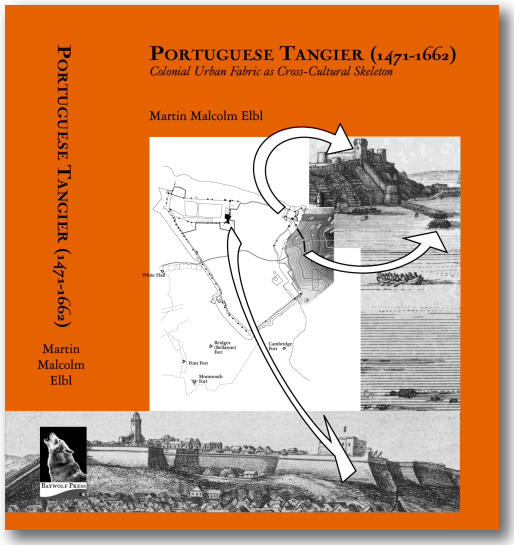
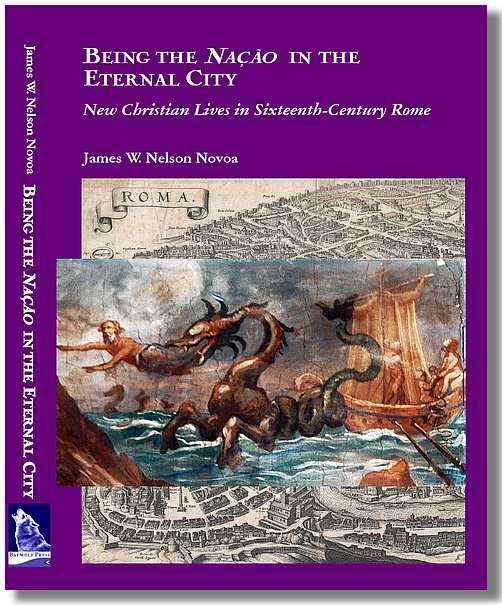
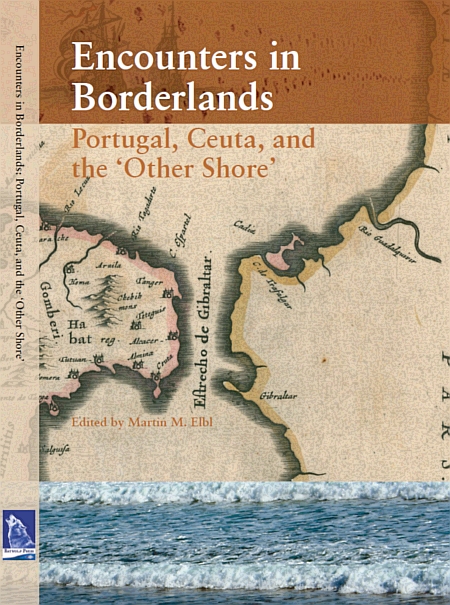
Portuguese Studies Review Gallery
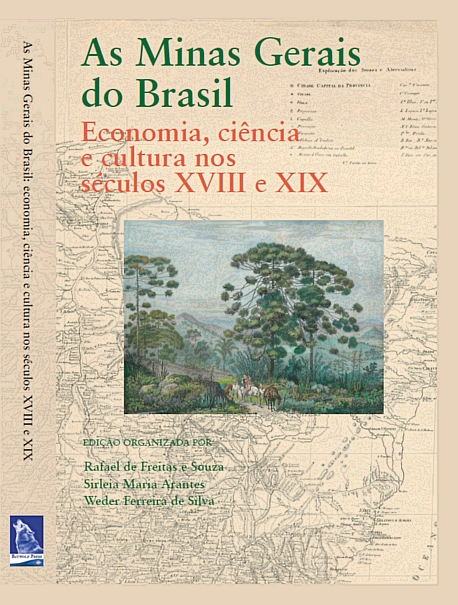
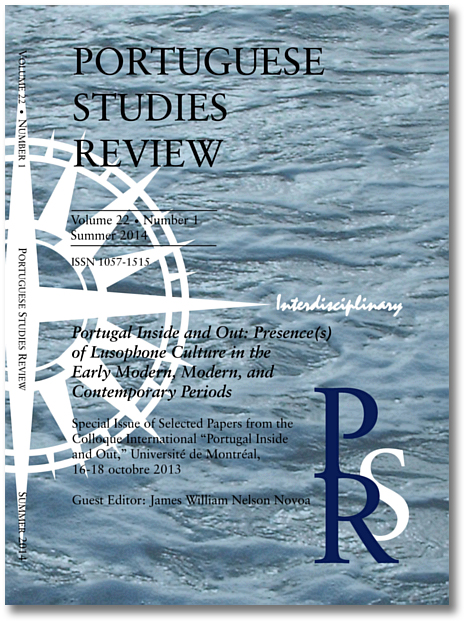
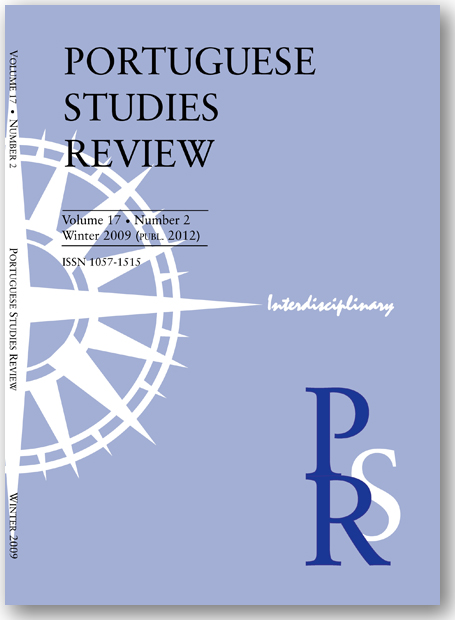
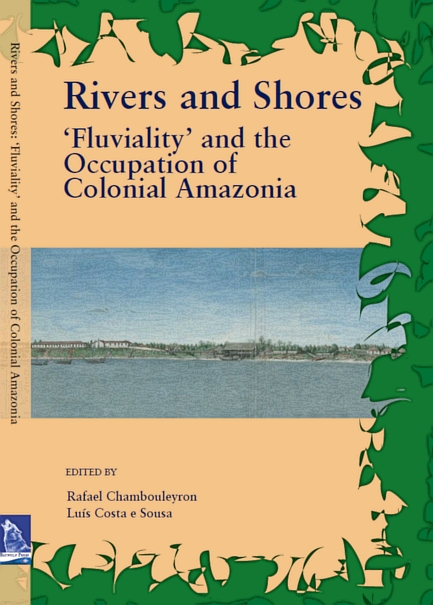
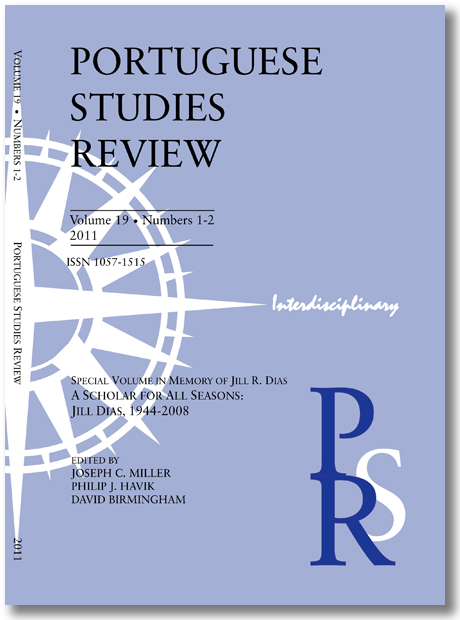
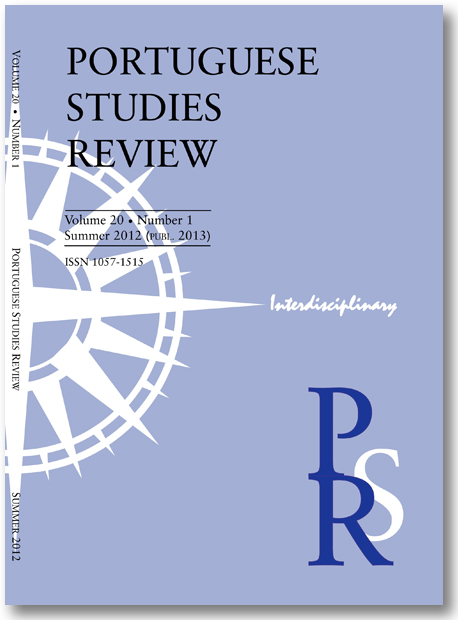
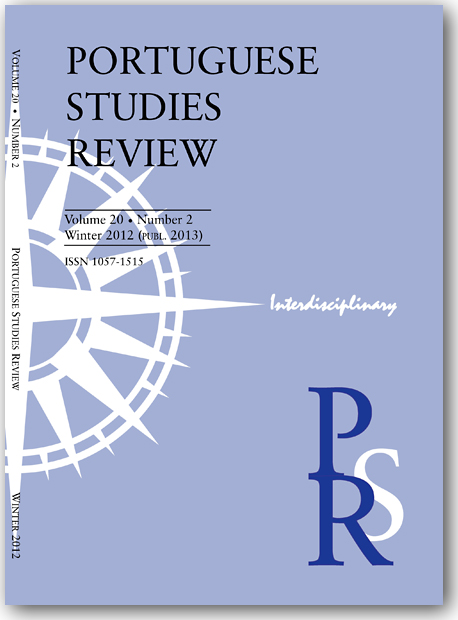
Selected Past and Current Volumes and PSR Monographs
Access and Distribution Look for us at Gale/CENGAGE and EBSCOhost e-resource and database centers in your subscribing library (our abstracts will also be restreamed at ProQuest). Soon on JSTOR. Ask your library to subscribe. Or subscribe in person. Previews of the PSR are available through Google Books (program now discontinued, replaced by previews on our own sites).
BIBLID National Library of Canada Cataloguing Record
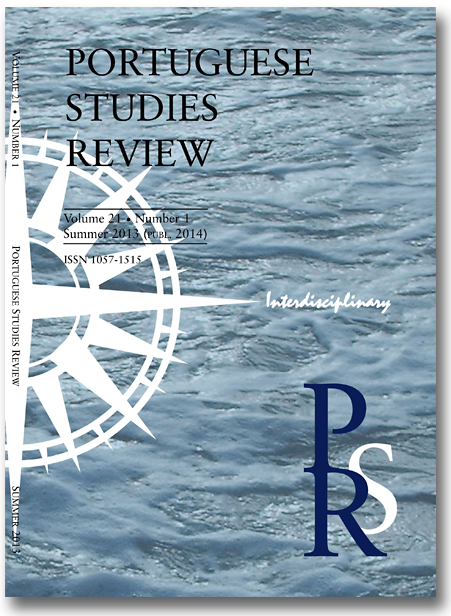
Portuguese Studies Review
ISSN 1057-1515 print
Semiannual
v. : ill. : 23 cm
1. Portugal–Civilization–Periodicals. 2. Africa, Portuguese-speaking–Civilization–Periodicals. 3. Brazil–Civilization–Periodicals. 4. Portugal–Civlisation–Périodiques. 5. Afrique lusophone– Civilisation–Périodiques. 6. Brésil–Civilisation–Périodiques.
DP532 909/.0917/5691005 21
Library of Congress Cataloguing Record
Portuguese Studies Review
ISSN 1057-1515 print
Semiannual
v. : ill. : 23 cm
1. Portugal–Civilization–Periodicals. 2. Africa, Portuguese-speaking–Civilization–Periodicals. 3. Brazil–Civilization–Periodicals.
DP532 .P67 909/.091/5691 20 92-659516
Indexing: American History and Life, Historical Abstracts, International Political Science Abstracts, Political Science Complete, Social Services Abstracts, Sociological Abstracts, Worldwide Political Science Abstracts; EBSCOHost. Archive: Google Books (preview program now terminated, replaced by a preview program on our own sites); GALE/Cengage Learning (Academic OneFile).